
REVIEW · WALKING TOURS
2 Hours Ljubljana Private Walking Tour with a Guide
Ljubljana reveals itself on foot. This two-hour private walk links the city’s key squares, bridges, market, and Old Town while a licensed guide explains how Roman, medieval, Baroque, and Art Nouveau influences fit together. I especially like the private format, which lets your group ask questions and set the pace, and the useful mix of architecture, food, history, and modern city life.
The route gives you a fast sense of place without asking for a full day. I also like that hotel pickup is offered, a helpful touch if you are still finding your way around. The main consideration is price: at $104.11 per person, it is a serious spend for two hours, particularly for a larger group that could see many of these sights freely on its own.
In This Review
- The key reasons to consider this walk
- Why two hours works well in Ljubljana
- Starting at Prešeren Square
- Congress Square and Ljubljana’s public face
- Crossing Shoemaker’s Bridge
- Thirty minutes in Ljubljana’s Old Town
- A taste of daily life at Central Market
- Meeting the dragons on Dragon Bridge
- Why Triple Bridge is the perfect final landmark
- What the private format really adds
- Is $104.11 per person fair?
- Who should book this walk?
- Booking details worth knowing
- Should you book it?
- FAQ
- How long does the Ljubljana walking tour last?
- Where does the tour start and finish?
- Is hotel pickup available?
- Is this a private tour?
- Are service animals allowed?
- What is the cancellation policy?
The key reasons to consider this walk
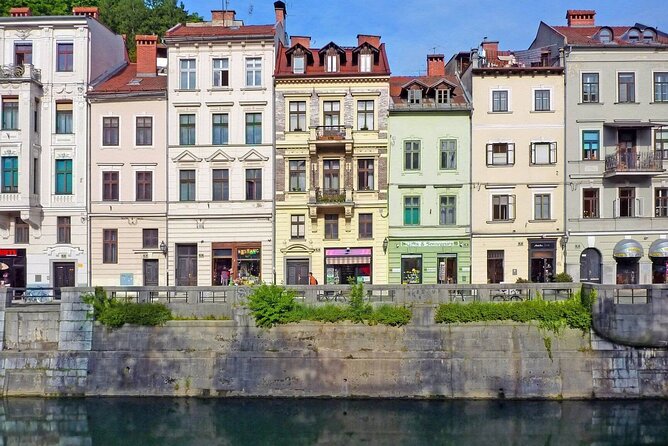
- Jože Plečnik’s Ljubljana: See the architect’s distinctive work at Shoemaker’s Bridge, the Triple Bridge, and the Central Market.
- A private two-hour route: Your group receives the guide’s full attention rather than joining a large public walk.
- Seven central stops: Prešeren Square, Congress Square, the Old Town, three major bridges, and the Central Market create a well-shaped introduction.
- Useful local advice: The guide can explain present-day life and offer tips on Slovenian food and places to eat.
- Easy first-day orientation: The route connects the modern center with medieval streets and the riverfront.
- Simple cancellation terms: You receive a full refund if you cancel at least 24 hours before the start time.
Why two hours works well in Ljubljana
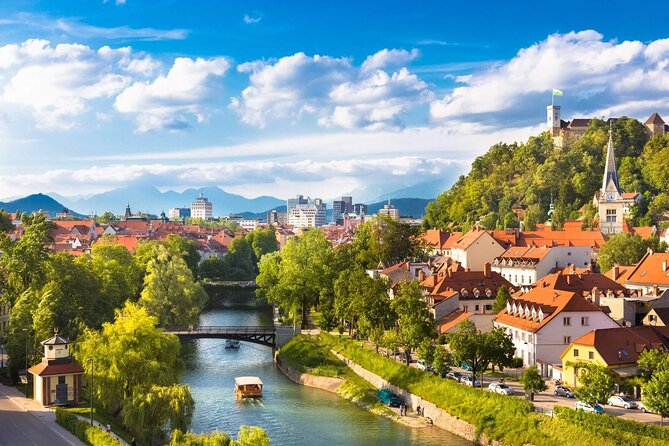
Ljubljana is compact, and this route makes good use of that. You are not spending the afternoon crossing town by vehicle. Instead, you move from square to square, following the Ljubljanica River and the pedestrian center.
The timing is carefully divided. Prešeren Square, Congress Square, Shoemaker’s Bridge, the Central Market, Dragon Bridge, and Triple Bridge each receive about 15 minutes. Ljubljana Old Town gets 30 minutes, giving you the longest pause where the streets and buildings require a little more attention.
That schedule is enough for orientation, photographs, and a clear explanation of the city. It is not enough for extended museum visits, a castle tour, or a leisurely market meal. No admission tickets are included or needed at the listed stops, so the experience is focused on streets, public squares, views, and commentary rather than indoor attractions.
I would use this walk near the start of a Ljubljana stay. After two hours, you should know where the main river crossings are, how the Old Town connects to the newer center, and which places deserve a return visit.
More Walking Tours in Ljubljana
- Ljubljana: Guided Walk & Funicular Ride to Ljubljana Castle
★ 4.6 · 576 reviews - Ljubljana: Slovenian Cuisine Walking Tour with Tastings
★ 4.8 · 472 reviews - Ljubljana: 2h walking tour with local guide
★ 4.7 · 433 reviews
Starting at Prešeren Square
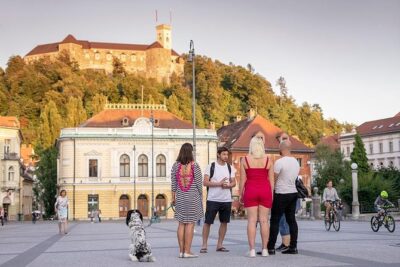
The listed meeting point is the monument to France Prešeren in Prešeren Square, written locally as Prešernov trg. This is an easy place to recognize in the middle of the city, though you should confirm the exact pickup arrangement if you plan to use the offered hotel transfer.
Prešeren was Slovenia’s greatest poet, and his monument gives the square its name and cultural focus. The setting also brings together several periods of Ljubljana’s architecture, including Baroque and Art Nouveau buildings.
Your guide can use this square to explain the city’s public life. Cafes, street performers, and seasonal events give it an active feel, so the stop is not only about buildings. It is also about seeing where people meet, pass through, and spend time.
The nearby Triple Bridge is already visible as one of Ljubljana’s key design features. This opening stop works well because it gives you a central reference point before the walk branches toward Congress Square and the river.
Congress Square and Ljubljana’s public face
Congress Square, or Kongresni trg, offers a more formal setting. Created in the 19th century, it is surrounded by the University of Ljubljana, the Slovenian Philharmonic, and Zvezda Park.
I like this stop because it adds political and cultural context to the walk. Prešeren Square feels social and urban. Congress Square shows how the capital presents its institutions and civic life.
Your guide can point out the way classical and newer influences share the same part of town. Since the stop lasts about 15 minutes, expect an overview rather than a detailed architectural lecture on each building.
This is also a useful pause for photographs and for getting your bearings before heading toward the river. If you want a deep discussion of Slovenian politics, music, or university life, two hours will not allow much time for it. Still, the square gives the route a good change of mood.
Crossing Shoemaker’s Bridge
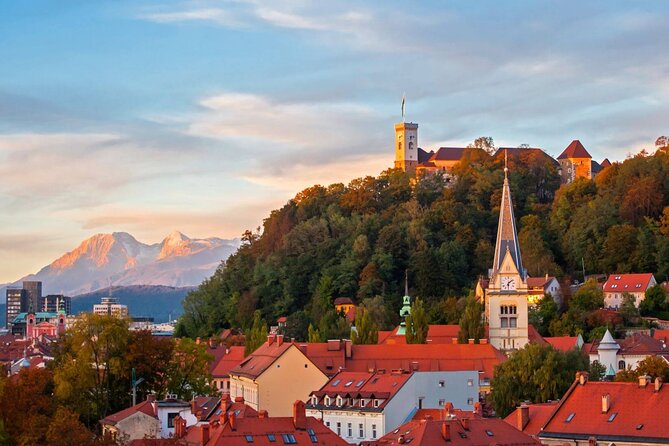
Shoemaker’s Bridge, also called Šuštarski most or Cobbler’s Bridge, is one of the more personal stops on the route. Its name comes from the cobblers who once had workshops on an earlier wooden bridge.
The current stone bridge was designed by Jože Plečnik, the architect whose work shapes much of central Ljubljana. Its balustrades and lamp posts give it a carefully designed look without making the crossing feel grand or overdone.
I would pay attention here to the relationship between practical city design and decoration. This is still a working bridge, but the details turn a simple crossing into a small piece of public art. The view along the Ljubljanica River also helps connect the riverfront to the Old Town.
The bridge is a calm stop in the middle of the route. You receive about 15 minutes, enough to hear its story and take in the architecture. You will not have much time to linger with a coffee or wait for a quiet photograph if the bridge is busy.
A completely different kind of day out:
- Ljubljana: Postojna Cave & Predjama Castle Tickets and Tour
★ 4.9 · 2,146 reviews - From Ljubljana: Trip to Lake Bled and Bled Castle
★ 4.7 · 1,426 reviews - Slovenia in One Day: Lake Bled, Postojna Cave and Predjama Castle
★ 5.0 · 879 reviews - Ljubljana: Castle Entry Ticket with Optional Funicular Ride
★ 4.3 · 718 reviews
Thirty minutes in Ljubljana’s Old Town
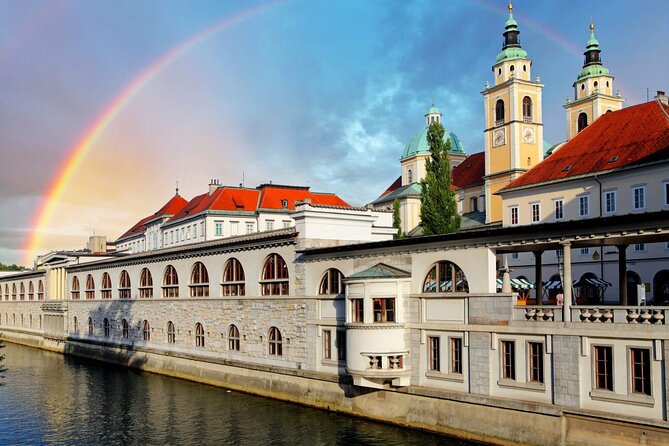
The longest stop comes in Stara Ljubljana, the medieval core of the city. Here, narrow streets and small squares bring together Gothic, Baroque, and Renaissance details.
This is where the walking format earns its keep. A guide can point out courtyards, street connections, and details you could easily pass without noticing. The Old Town also contains cafes, artisan shops, and views toward Ljubljana Castle, which sits above the city.
The route description presents the Old Town as an area to explore rather than a single monument to check off. That is the right approach. Ljubljana’s charm comes from the way its streets, river, bridges, and buildings work together.
The 30-minute allocation is useful but still short. You should expect a guided introduction, not free time for shopping or a full meal. If you want to visit the castle, enter museums, or browse every side street, plan to return later.
A taste of daily life at Central Market
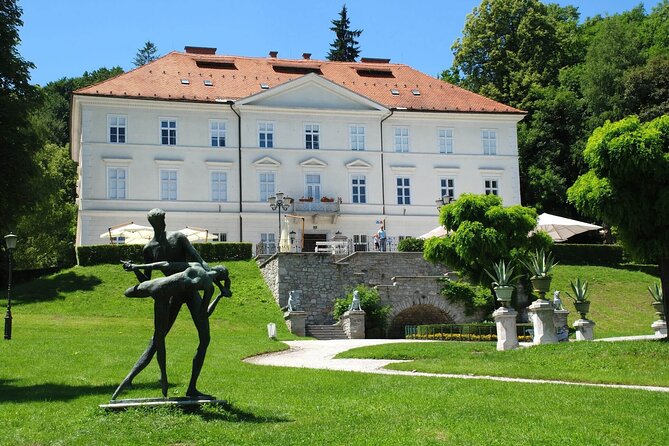
The Central Market is one of the most practical stops because it shows Ljubljana as a living city, not only as a collection of historic facades. It runs along the Ljubljanica between the Dragon Bridge and Triple Bridge, with open-air stalls and historic market halls.
The market was designed by Plečnik, so the architecture matters as much as the food. Stalls offer fresh produce, spices, Slovenian breads, cheeses, traditional foods, and handmade goods. The guide can explain what you are seeing and offer suggestions for local cuisine.
The two published comments about this experience place unusual emphasis on food advice. One specifically praised the combination of history, sights, and food, while another noted useful recommendations about local dishes. That makes this stop more valuable than a quick pass through a market if you are unsure what to eat in Slovenia.
Keep your expectations practical. The scheduled stop is about 15 minutes, so it is mainly for orientation and suggestions. You may find something tempting to buy, but there is no promise of a tasting session or a sit-down meal.
Meeting the dragons on Dragon Bridge
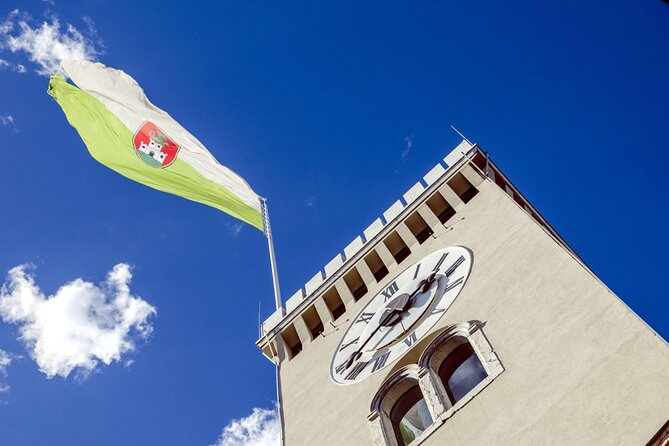
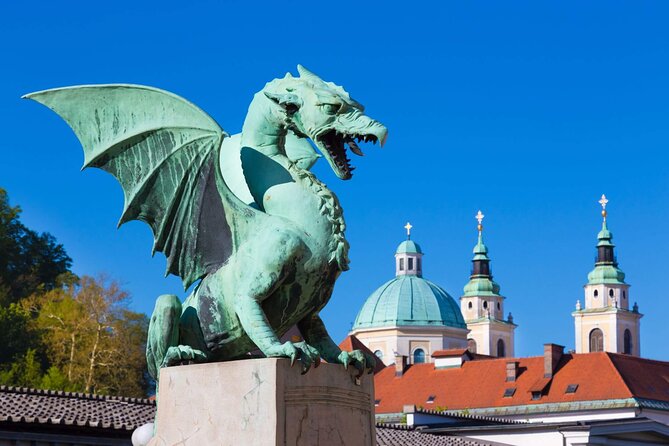
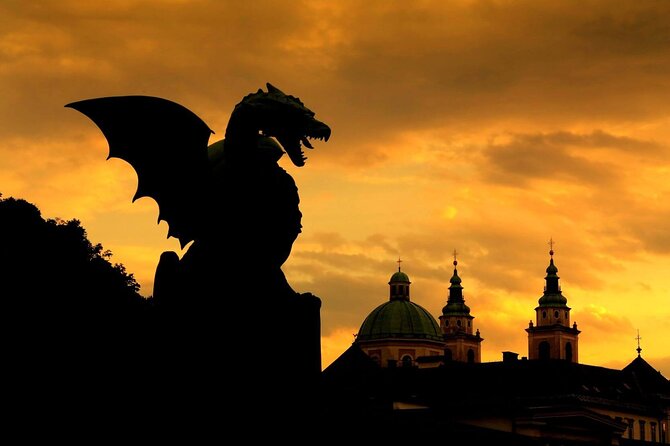
Dragon Bridge, or Zmajski Most, is among Ljubljana’s most recognizable sights. Its Art Nouveau design and four dragon statues give the crossing a playful identity that is easy to remember.
The bridge dates from the early 20th century and reflects the city’s interest in modern engineering and design at that time. The dragons connect the structure to local legend. One story says their tails wag when a virgin crosses the bridge.
Your guide can add the story to the architectural explanation, giving you a lighter moment after the more formal squares and older streets. The bridge is also a good photography stop, with the river and nearby buildings framing the dragons.
Again, the schedule allows about 15 minutes. That should work for a short explanation and photographs. It will feel quick if you want to study the bridge’s construction or wait for a completely clear view.
Why Triple Bridge is the perfect final landmark
Triple Bridge, or Tromostovje, brings the walk back to the center of Ljubljana. The middle bridge was built in 1842, and Plečnik added the two pedestrian bridges in 1932.
The result is more than a bridge with extra lanes. It links the medieval town to the modern city and creates a memorable public space beside the river. Its balustrades and lamps echo Plečnik’s design at Shoemaker’s Bridge, so by this point you can begin to recognize the architect’s approach.
This is a strong final stop because it ties together several themes from the walk: old and new construction, movement across the river, and the way public places shape city life. You may also recognize it from your opening view at Prešeren Square, which gives the route a satisfying loop.
The activity ends back at the meeting point. That makes planning simple, especially if you want to continue independently from the center after the guide says goodbye.
What the private format really adds
A private tour is most useful when you want conversation rather than a fixed speech. Only your group takes part, so you can ask about food, architecture, history, or present-day life as questions arise.
That flexibility matters on a short tour. A public group may need to keep moving even if you want clarification. Here, your guide can spend more time on a point that interests you and less time on one that does not.
The quality of the guide will shape the experience. Miloš received especially strong praise for combining history, architecture, culture, and current city life, along with local food suggestions. If Miloš is assigned to your booking, that mix is exactly what you should hope for. Guide assignments can vary, so it is sensible to treat his name as a helpful detail, not a guarantee.
Pickup is offered, but the stated start point is Prešeren Square. Confirm whether your hotel pickup is included for your location and where the walk officially begins. The route is near public transportation, and service animals are allowed. Most people can take part, but the experience is still a two-hour walk, so comfortable shoes are a sensible choice.
Is $104.11 per person fair?
At $104.11 per person, this is not a budget sightseeing walk. The price makes the most sense for couples, families, or small groups who place a high value on personal attention.
A private guide can be good value when several people share the booking, especially if you want tailored explanations and restaurant advice. Group discounts are offered, which may improve the cost for larger parties. The value is weaker if you are traveling alone, mainly want photographs, or are comfortable reading about the city yourself.
You are paying for more than access to the sights. Every listed stop is a public place with no admission charge. The cost covers the guide’s time, route planning, private service, and the chance to ask direct questions about Ljubljana.
I would compare it with the price of other private city walks before booking. If the difference is small and you want a focused introduction, this experience can save you time and help you choose what to revisit. If your budget is tight, a free public walk or self-guided route may leave more money for market food and museums.
Who should book this walk?
I would recommend it most strongly to first-time visitors with only a short stay. It gives you a clear map of central Ljubljana and introduces the places you are most likely to return to.
It also suits anyone interested in architecture. Plečnik’s work appears at several stops, allowing you to see how one designer influenced bridges, market buildings, and the look of the riverfront.
Food-focused visitors should also consider it, especially if local dishes and dining suggestions matter to you. The market stop and the guide’s reported food advice add a practical layer to the sightseeing.
Families and small private groups may appreciate the easier pace and the ability to ask questions. Guests with service animals are welcome, and most people can participate, but the activity does not promise step-free access at every point or a shorter route.
I would be less likely to book it if I had several days in Ljubljana and enjoyed exploring independently. I would also think twice if $104.11 feels high for two hours and you do not need a guide.
Booking details worth knowing
Confirmation is provided when you book, and the tour is offered with a mobile ticket. The experience requires good weather, so poor conditions may lead to a different date or a full refund.
You can cancel for a full refund up to 24 hours before the start time. Cancellations or changes made inside that 24-hour window are not refunded or accepted, and the cut-off uses local time.
The activity is operated by Slovenia Explorer. Since the published starting point is the France Prešeren Monument in Prešeren Square and the end returns there, check pickup details before you set your day around a hotel transfer.
Should you book it?
Book this tour if you want a personal introduction to Ljubljana that combines famous sights with useful local context. The route is short, well organized, and strong on bridges, public squares, Plečnik’s design, the Old Town, and food guidance.
Skip it if you are watching every euro, prefer self-guided sightseeing, or want time inside museums and the castle. For everyone else, especially first-time visitors and small groups, the private format can make two hours count. Start early in your stay, listen closely at the market, and use the final Triple Bridge stop as your launch point for exploring the city on your own.
FAQ
How long does the Ljubljana walking tour last?
The tour lasts approximately two hours. The scheduled route includes seven stops, with 30 minutes in the Old Town and about 15 minutes at each of the other six stops.
Where does the tour start and finish?
The stated meeting point is the Spomenik Francetu Prešernu, at Prešeren Square in Ljubljana. The activity ends back at the meeting point.
Is hotel pickup available?
Pickup is offered, including helpful round-trip hotel pickup. Since the stated meeting point is Prešeren Square, confirm the exact pickup arrangement when booking.
Is this a private tour?
Yes. Only your group participates in the activity.
Are service animals allowed?
Yes. Service animals are allowed on the tour.
What is the cancellation policy?
You can cancel at least 24 hours before the experience start time for a full refund. Cancellations or changes made less than 24 hours before the start time are not accepted, and the amount paid is not refunded. If poor weather causes the tour to be canceled, you will be offered another date or a full refund.
Just added in Ljubljana
- Zagreb to Slovenia: Discover Bled and Ljubljana in a Day★ 4.7 · 2 reviews
- Gokart experience at Woop! karting – the fastest attraction★ 4.0 · 5 reviews
- Woop! Fun park with 21 attractions★ 4.6 · 3 reviews
- 1 Hour Private Woop Challenges in Jurčkova Cesta★ 5.0 · 2 reviews
- Private Zagreb Tour from Ljubljana★ 4.5 · 3 reviews
- Half-Day Small-Group Hiking Tour of Viševnik★ 5.0 · 2 reviews
- Wine and Culinary Adventure in Jeruzalem – Full Day Tour from Ljubljana or Ptuj★ 5.0 · 5 reviews
- UNESCO’s Skocjan Caves, Europe’s largest underground canyon, Half Day Trip from Ljubljana★ 5.0 · 6 reviews
Walking Tours, compared.
Guided Walk & Funicular Ride to Ljubljana Castle
Read our review →
Piran Walking Tour with Local Wine and Food Tasting
Read our review →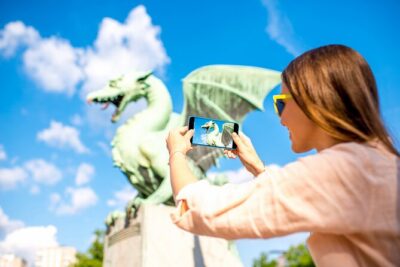
Browse the lists this tour appears in