
REVIEW · CYCLING TOURS
Ljubljana Small Group Bike Tour – On and Off the Beaten Track
Ljubljana makes cycling feel easy. This two-hour ride links the city’s famous bridges and squares with places many first-time visitors might miss, including Krakovo, Spica, the Roman Wall, and Metelkova. The route is guided, central, and limited to 15 people, so you get both useful context and a manageable group.
I especially like the mix of Plecnik architecture and everyday city life, from the covered market to the National and University Library. I also like that the tour reaches beyond the postcard center without requiring a full day. The main consideration is timing: with roughly 20 stops packed into two hours, most places receive only a short explanation rather than a long visit.
In This Review
- Key Points at a Glance
- Why a Bike Is a Good Way to Meet Ljubljana
- Dragon Bridge and the First Look at Ljubljana’s Symbols
- Old Town, the Cathedral, and the Market
- Shoemaker’s Bridge and Plecnik’s Ljubljana
- Town Hall and French Revolution Square
- Krakovo and the Ride Toward Spica
- Roman Ljubljana and the National Library
- Congress Square and Republic Square
- Preseren Square and the City’s Main Meeting Place
- Metelkova: From Military Barracks to Art Quarter
- Guide Quality and Group Size
- Timing, Meeting Point, and Practical Details
- Who Will Get the Most From This Ride?
- Should You Book the Ljubljana Small Group Bike Tour?
- FAQ
- How long does the Ljubljana bike tour last?
- Where does the tour start?
- Where does the tour end?
- What is the price?
- How large is the group?
- Does the tour include admission tickets?
- Which days and times does the tour operate?
- Is the meeting point near public transportation?
- Can I cancel for a full refund?
Key Points at a Glance
- Dragon Bridge opens the story: Learn why Ljubljana uses the dragon as its symbol, with a link to Jason and the Argonauts.
- Plecnik appears throughout the route: See his work at Shoemaker’s Bridge, the covered market, the National and University Library, and other central sites.
- Krakovo feels surprisingly rural: Ride past old houses and gardens in a district that once supplied food to the city.
- Spica adds a quiet riverside pause: See where the Ljubljanica splits and hear why the river has seven names.
- Metelkova offers a sharp change of mood: Former military barracks now hold art spaces, clubs, bars, and artist studios.
- Small-group format keeps it personal: The maximum is 15 people, and guide Peter received specific praise for answering questions clearly.
Why a Bike Is a Good Way to Meet Ljubljana
Ljubljana’s center is compact, but its sights are spread across different neighborhoods and eras. Walking lets you linger, but a bike helps you connect the old town, riverbanks, southern districts, modern civic spaces, and Metelkova in one outing.
This is not a strenuous countryside ride. It is a guided tour of central Ljubljana, with frequent stops and commentary as you pedal. That makes it useful early in your stay, when you want to get your bearings and decide where to return on foot.
The route also gives you more than a string of monuments. You pass market stalls, cafes, narrow lanes, old residential streets, river views, Yugoslav-era architecture, and an artist quarter. That variety helps you see Ljubljana as a living capital rather than only a pretty historic center.
At $75.63 per person, the price is not the cheapest way to see the city. Still, it can offer fair value if you want a guide to handle the route, explain the city’s symbols, and connect distant sights within a short window. Group discounts may make the cost easier to justify for families or friends booking together.
More Bike Tours in Ljubljana
- Ljubljana Bike Tour
★ 5.0 · 138 reviews - Ljubljana by E-Bike: Guided City Highlights Tour
★ 4.8 · 28 reviews - E-bike tour Škofja Loka
★ 5.0 · 27 reviews
Dragon Bridge and the First Look at Ljubljana’s Symbols
The tour begins at Adamič-Lundrovo nabrežje 6, close to the river and central sights. The first stop is Dragon Bridge, one of Ljubljana’s most recognizable Art Nouveau structures.
The dragons are not just decorative figures added for drama. The guide explains their connection to the city’s symbol and to the story of Jason and the Argonauts. That small piece of mythology gives the bridge a story you can remember as you continue through town.
You receive about five minutes here, so this is a quick orientation rather than a detailed architectural visit. Have your camera ready before the group stops, since the bridge is a key visual marker for the rest of your exploration.
Old Town, the Cathedral, and the Market
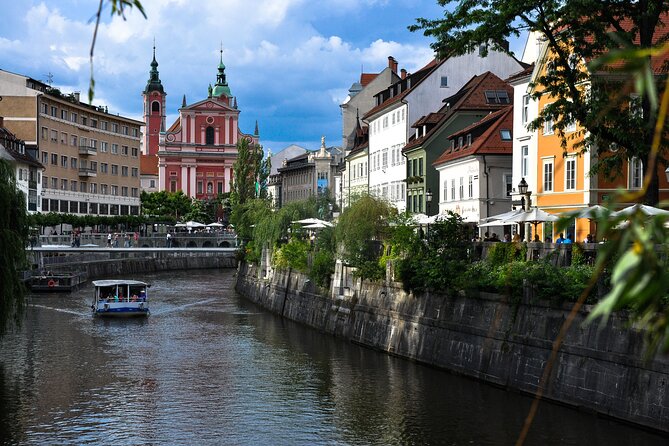
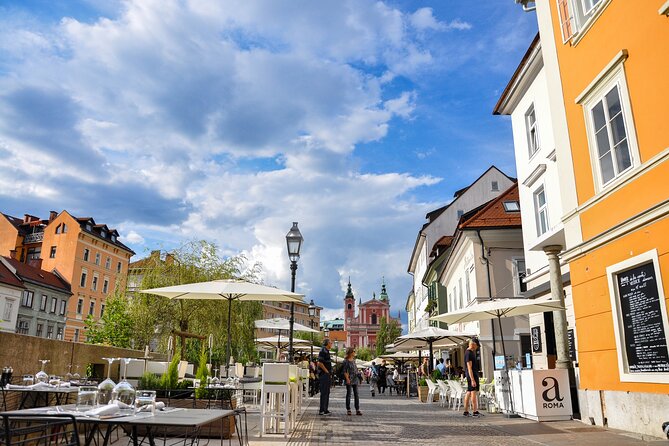
The ride continues through part of Ljubljana’s Old Town, where colorful facades, narrow streets, cafes, restaurants, and old squares create the city’s familiar look. The pace allows you to see several major sights without turning the tour into a long walking lecture.
The Farmers’ Market is an especially useful stop. Farmers from Ljubljana and other parts of Slovenia bring produce, bread, cheese, meat, handicrafts, and souvenirs here. Part of the covered market was designed by Joze Plecnik, the architect whose work shapes so much of the city.
You also see the cathedral, bridges, and the Town Hall area. The market stop lasts about 10 minutes, while the wider Old Town section receives about 20 minutes. That is enough for an introduction and perhaps a quick look at what you might want to revisit later.
I would not treat this part as a substitute for a market visit on foot. The bike keeps you moving, and the schedule is tight. Instead, use the stop to note the market’s location and return later if you want to browse slowly or buy food.
Shoemaker’s Bridge and Plecnik’s Ljubljana
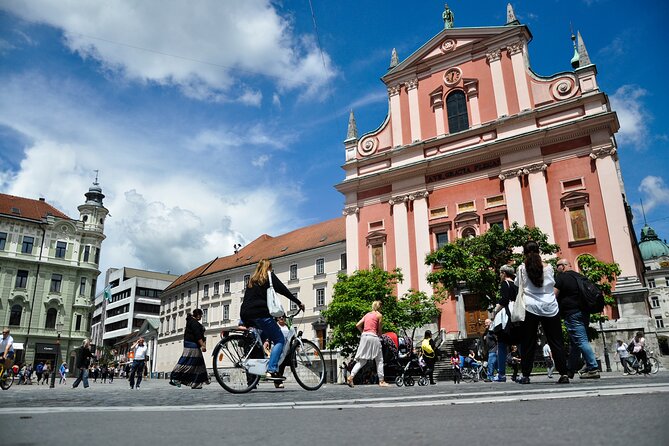
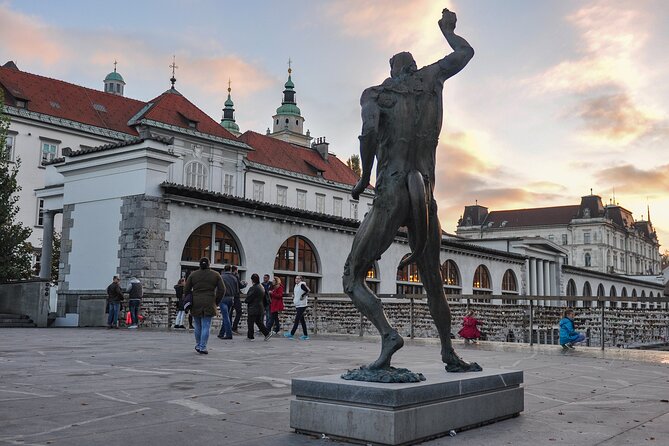
Shoemaker’s Bridge is one of the older crossings in the city, but its current design is linked to Joze Plecnik. From here, you can look across the old town and hear about the Ljubljanica, the river that gives Ljubljana much of its character.
The guide also explains why the river is called a river of seven names. That is the sort of local detail that makes a short city tour worthwhile. You are not only checking off a bridge. You are learning how water, trade, settlement, and local identity fit together.
Plecnik’s influence returns at several later points. If architecture interests you, pay attention to how his work appears in bridges, markets, squares, and civic buildings. The tour does not enter every site, but it gives you a useful framework for recognizing his style across the city.
A completely different kind of day out:
- Ljubljana: Postojna Cave & Predjama Castle Tickets and Tour
★ 4.9 · 2,146 reviews - From Ljubljana: Trip to Lake Bled and Bled Castle
★ 4.7 · 1,426 reviews - Slovenia in One Day: Lake Bled, Postojna Cave and Predjama Castle
★ 5.0 · 879 reviews - Ljubljana: Castle Entry Ticket with Optional Funicular Ride
★ 4.3 · 718 reviews
Town Hall and French Revolution Square
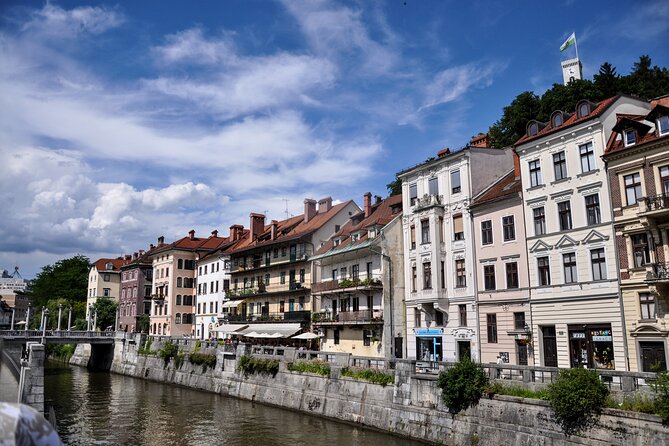
At Town Hall, you stop by one of the old center’s most important buildings. Mayors of Ljubljana have been appointed there for about 500 years, giving the site a direct link to the city’s civic life.
The stop is short, around five minutes, so expect an exterior explanation rather than a full interior visit. That is typical of this tour: you get the reason a building matters, then continue before the route loses momentum.
French Revolution Square adds another layer of European history. The square has a monument connected to Napoleon, described as possibly the only monument dedicated to him outside France. The guide uses the site to explain the Napoleonic Wars and why that period mattered to Slovenes.
This is a good example of the tour’s broad scope. In a few blocks, you move from medieval and local government to continental politics, then back to daily market life.
Krakovo and the Ride Toward Spica
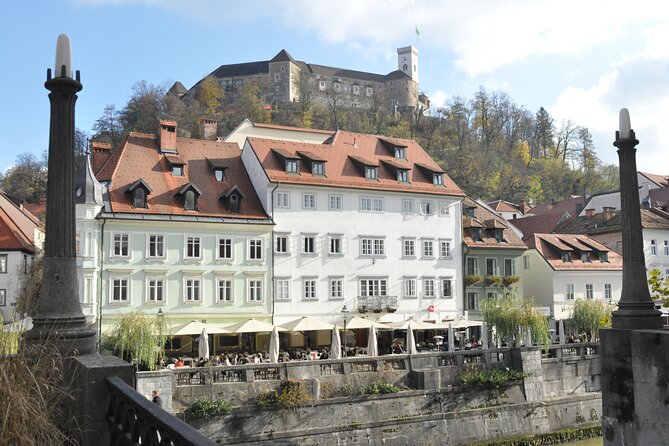
Krakovo is one of the route’s more distinctive sections. It can feel like a village inside the capital, with old houses and gardens lining the streets. The neighborhood once helped produce food for the city, and its remaining character gives you a break from grand buildings and formal squares.
The five-minute stop is brief, but the point is clear: Ljubljana is not only its central plazas. You also see quieter residential areas where the city’s older working life remains visible.
Next comes Park Spica, where the Ljubljanica splits. The setting combines water, greenery, and nearby settlement, offering a calmer pause after the narrow streets of the center. The guide discusses the river’s importance to Ljubljana, and the tour may also include a look at river animals.
The stop lasts about 10 minutes. I like this section because it changes the rhythm of the ride. You get a little breathing room and a clearer sense of how the river shapes the city beyond the bridges and restaurant-lined banks.
Roman Ljubljana and the National Library
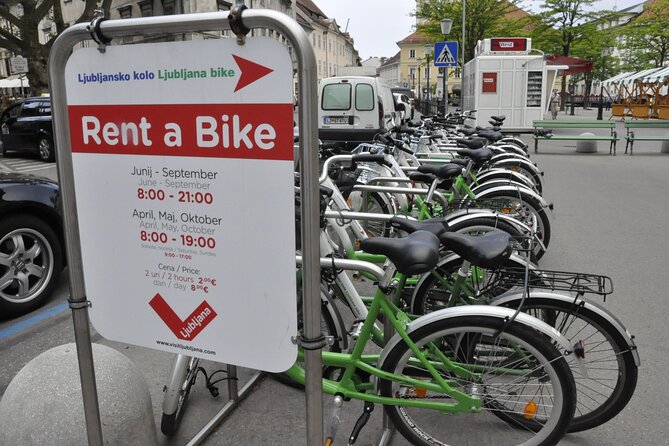
Ljubljana began as the Roman settlement of Emona, and remnants of that past still appear in the city. The tour passes Roman walls and uses them to explain the ancient chapter of Ljubljana’s story.
Again, this is a pass-by stop rather than an archaeological visit. You will not spend a long time examining Roman remains, but the inclusion keeps the city’s timeline from starting only with its medieval streets.
The National and University Library is one of the route’s major architectural highlights. It is considered Joze Plecnik’s biggest project and contains layers of symbolism in its design. The tour stops for about five minutes.
Admission to the library is not included, and the supplied details do not promise an interior visit. Plan to see it from outside during the ride, then investigate separate entry options if you want more time with the building.
Congress Square and Republic Square
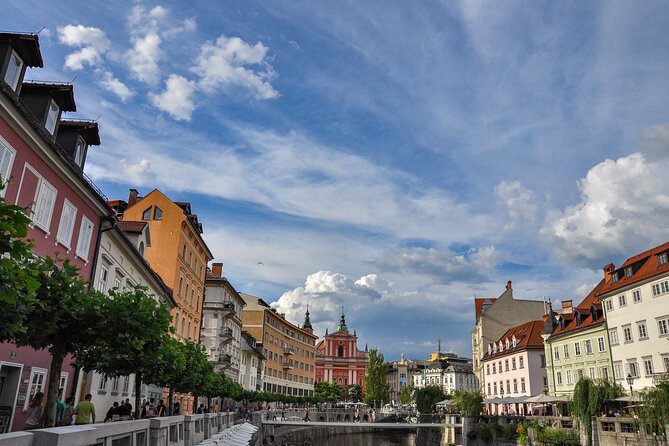
Congress Square is Ljubljana’s largest old-town square. Its name recalls the 1821 Congress of the Holy Alliance, held in the city after the Napoleonic Wars.
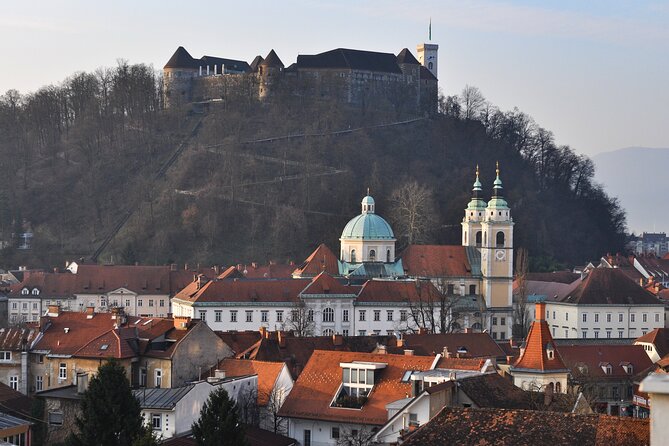
The square offers good views toward Ljubljana Castle and several important buildings, including the Ursuline Church, the University building, and the Slovenian Philharmonic Association building. Star Park sits beside it, adding a green edge to the formal space.
You receive around 10 minutes here, enough to hear the square’s story and take in the surrounding architecture. It is also a useful place to orient yourself to the castle, even though the tour does not include a castle visit.
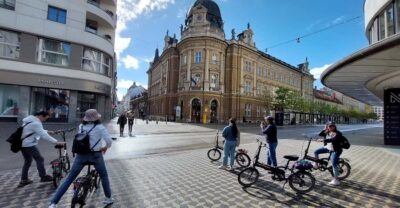
Republic Square shifts the focus to the period after the Second World War. Tall towers, the parliament building, and a Brutalist department store frame the space. The guide connects the architecture to the years when Slovenia was part of Yugoslavia.
This stop matters because it prevents Ljubljana from becoming a city frozen in old stone. The modern civic center shows another side of its political and architectural story. If you enjoy twentieth-century buildings, this may be one of the most revealing stops.
Preseren Square and the City’s Main Meeting Place
Preseren Square is Ljubljana’s main square and one of the most photogenic points on the route. It is named for France Preseren, Slovenia’s famous poet.
The guide explains Preseren’s unrequited love for Julia and how that experience shaped some of his most important poems. You also see Triple Bridge nearby, along with Art Nouveau buildings that help define the center.
This is one of the places where the short duration may feel limiting. The square connects several important sights, and you may want time to look up at the facades, study the bridge, and return later for photographs. The tour gives you the story and the location, but not much time for quiet observation.
Metelkova: From Military Barracks to Art Quarter
The final major stop is Metelkova Autonomous Zone, a very different part of Ljubljana. The area began as military barracks, abandoned in 1991 when the Yugoslav army withdrew.
Artists, intellectuals, and students later occupied the buildings. Today, Metelkova includes galleries, clubs, bars, and artist studios. On Friday and Saturday nights, it becomes a party area associated with alternative music.
The stop lasts about 10 minutes. That is enough to introduce its history and show you why the area feels unlike the old town, but you will need to return independently if you want to explore its galleries or nightlife at length.
Metelkova is a strong choice for the route’s ending because it leaves you with a less polished, more experimental image of Ljubljana. It also gives you a practical idea of where to go later if you want evening music or alternative culture.
Guide Quality and Group Size
The maximum group size is 15 people. That is small enough for a guide to answer questions without the ride becoming a private tour. It also matters at stops where the streets and squares may not offer much room for a large gathering.
Peter is the guide specifically praised in the available feedback. Amy described him as a terrific guide who answered questions well and made the bike experience especially enjoyable. Peter’s reply was warm and personal, which suggests a friendly approach rather than a purely scripted presentation.
I would ask for Peter when booking if he is available, but availability is not guaranteed. The tour’s value depends heavily on the guide’s ability to keep nearly 20 stops moving while still giving each site a clear explanation.
Timing, Meeting Point, and Practical Details
The tour lasts about two hours and ends back at the starting point. It operates Monday through Friday, with listed hours from 3:30 PM to 8:00 PM for the period from December 5, 2024, through June 17, 2026.
That afternoon schedule can work well after a morning museum visit or a relaxed lunch. It also means you should check the exact available departure time when booking, since the published hours cover a window rather than naming one fixed start for every date.
The meeting point is Adamič-Lundrovo nabrežje 6, 1000 Ljubljana, Slovenia. The location is near public transportation. Confirmation is sent within 48 hours of booking, subject to availability, so do not leave the reservation until the last moment if your schedule is tight.
Most people can participate, and the tour offers a mobile ticket. Group discounts are available. Free cancellation applies when you cancel at least 24 hours before the start time. Cancellations within 24 hours, and changes made within that period, are not accepted for a refund.
Who Will Get the Most From This Ride?
I would choose this tour if you have only a short time in Ljubljana and want a clear introduction to the city’s main districts. The route covers architecture, mythology, Roman remains, market life, river geography, Yugoslav-era design, and alternative culture in one compact outing.
It also suits you if you prefer seeing a city in motion rather than spending two hours inside museums or walking slowly from one square to the next. The bike makes it possible to cover more ground while still stopping often.
History fans will appreciate the range of subjects, though the explanations are necessarily brief. Architecture enthusiasts should pay special attention to Plecnik’s projects. You will see several of his major works, but the tour does not provide the time for a detailed study of every building.
I would be more cautious if you want a relaxed ride with long stops, a countryside route, or a dedicated food tour. The Farmers’ Market is included, but you are not given a long period to shop or eat. Likewise, Metelkova is introduced, not fully explored.
Should You Book the Ljubljana Small Group Bike Tour?
Book it if you want a fast, well-rounded first look at Ljubljana and like the idea of combining famous sights with quieter neighborhoods. The route is especially useful at the start of a stay, when you can return later to the market, Preseren Square, Metelkova, or the riverbanks.
At $75.63, I would judge the price against the value of your time. For a two-hour guided introduction with a group capped at 15, it can make sense if you would otherwise struggle to connect these areas yourself. Just keep your expectations in line: this is a lively overview, not a deep architectural tour or a series of long visits.
Ask for Peter if possible, arrive ready to pedal and listen, and mark the places you want to revisit. For most people who want history, local character, and a little movement in the same outing, this is a solid way to meet Ljubljana.
FAQ
How long does the Ljubljana bike tour last?
The tour lasts approximately two hours.
Where does the tour start?
It starts at Adamič-Lundrovo nabrežje 6, 1000 Ljubljana, Slovenia.
Where does the tour end?
The tour ends back at the meeting point.
What is the price?
The listed price is $75.63 per person. Group discounts are available.
How large is the group?
The maximum group size is 15 people.
Does the tour include admission tickets?
Most stops are free to view. Admission to the National and University Library is not included.
Which days and times does the tour operate?
The listed operating schedule is Monday through Friday, from 3:30 PM to 8:00 PM, for dates from December 5, 2024, through June 17, 2026.
Is the meeting point near public transportation?
Yes. The meeting point is near public transportation.
Can I cancel for a full refund?
Yes, if you cancel at least 24 hours before the experience start time. Cancellations within 24 hours are not refunded, and changes within that period are not accepted.
Just added in Ljubljana
- Zagreb to Slovenia: Discover Bled and Ljubljana in a Day★ 4.7 · 2 reviews
- Gokart experience at Woop! karting – the fastest attraction★ 4.0 · 5 reviews
- Woop! Fun park with 21 attractions★ 4.6 · 3 reviews
- 1 Hour Private Woop Challenges in Jurčkova Cesta★ 5.0 · 2 reviews
- Private Zagreb Tour from Ljubljana★ 4.5 · 3 reviews
- Half-Day Small-Group Hiking Tour of Viševnik★ 5.0 · 2 reviews
- Wine and Culinary Adventure in Jeruzalem – Full Day Tour from Ljubljana or Ptuj★ 5.0 · 5 reviews
- UNESCO’s Skocjan Caves, Europe’s largest underground canyon, Half Day Trip from Ljubljana★ 5.0 · 6 reviews
Cycling Tours, compared.
Ljubljana by E-Bike: Guided City Highlights Tour
Read our review →Browse the lists this tour appears in