
REVIEW · HISTORICAL TOURS
Ljubljana: UNESCO cultural heritage tour
Ljubljana’s grand design starts with one architect. This private walking tour shows how Jože Plečnik reshaped a small provincial town into a capital with the ambition of a new Athens. I especially like the focus on original details, from unusual street lamps to stone pyramids, and the easy pace that lets you look up instead of hurrying from sight to sight.
I also like the personal scale. The tour costs $223 for a private group of up to seven, so the value improves quickly when shared among several people. A possible drawback is the flexible two-to-four-hour length: without confirming the exact starting time and route, you may not know how much ground you will cover.
In This Review
- Key details that shape the experience
- Why Plečnik is the key to Ljubljana
- Starting at Krekov trg beside the funicular
- The National Library and Plečnik’s larger idea
- Križanke Complex and the city’s changing use
- Counting Plečnik’s lamps across three bridges
- What Plečnik’s pyramids are doing there
- Central Market, public life, and the best sensory stop
- Prešeren Square and Ljubljana’s story
- How long the walk takes and what the pace feels like
- Is $223 good value for a private group?
- Who should book this Ljubljana UNESCO tour?
- Should you book it?
- FAQ
- Where does the tour meet?
- Can the guide meet my group somewhere else?
- How long does the tour last?
- How much does the private tour cost?
- Which languages are available?
- Is the walking route physically demanding?
- Is the tour wheelchair accessible?
- What sights are included?
- Are snacks included?
Key details that shape the experience
- Plečnik’s National Library: See one of Ljubljana’s most important buildings and learn how its design reflects the architect’s vision for the capital.
- Count the lamps and pyramids: The guide turns small architectural details into part of the story, especially around the Triple Bridge, Cobblers Bridge, and Trnovo Bridge.
- Central Market with a local flavor: Follow the smells of the market and see another Plečnik-designed building in one of the city’s most useful public spaces.
- A private walk for up to seven: You get a more personal experience than a large group tour, with room for questions and route adjustments.
- A practical introduction to Ljubljana: The walk includes advice about other things to do in the city and around Slovenia.
- An easy, accessible outing: The tour is not physically demanding, and wheelchair access is available.
Why Plečnik is the key to Ljubljana
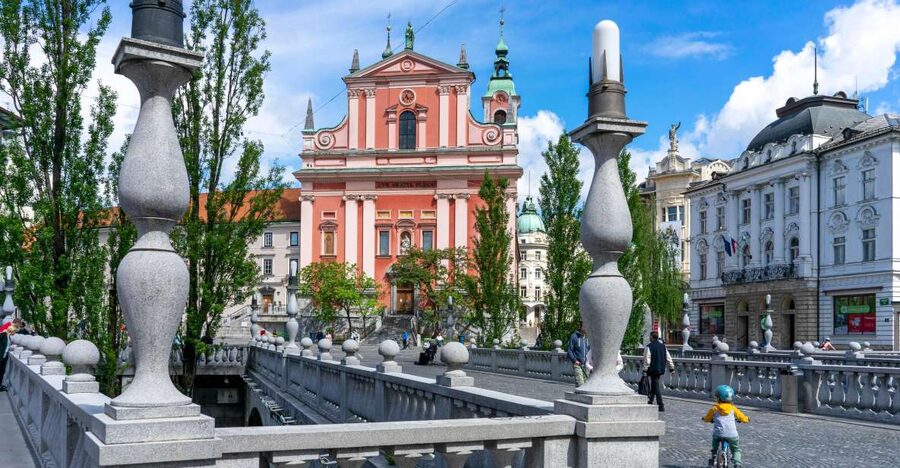
Ljubljana can look charmingly small at first. The historic center is compact, the river is easy to follow, and many sights sit within a pleasant walking distance. Plečnik gives that compact city its visual order.
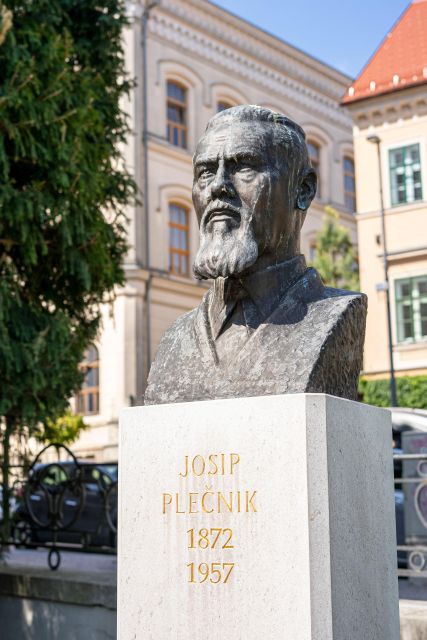
Jože Plečnik was Slovenia’s greatest architect, and his work in Ljubljana was not limited to one grand building. He shaped bridges, embankments, markets, lighting, public squares, and religious or cultural spaces. His goal was bold: he imagined Ljubljana as a new Athens, a city whose public places could express national pride and civic life.
That idea is easier to understand when you see the details together. A lamp on a bridge may seem minor on its own. A pyramid may look like simple decoration. After a guide explains how these features repeat and connect across the center, you begin to see Ljubljana as a carefully planned composition rather than a collection of pretty streets.
The tour’s UNESCO focus matters for this reason. You are not simply looking at attractive architecture. You are seeing a connected body of urban design recognized as World Cultural Heritage. The value is in the relationship between the buildings and the public spaces around them.
More history tours in Ljubljana:
- From Ljubljana: Piran Trip with Historic Walking Tour
★ 4.7 · 91 reviews - Historic Ljubljana Tour with Ljubljana Castle included
★ 5.0 · 11 reviews - Ljubljana: Wonderful tour fun experience time history
★ 4.9 · 7 reviews
Starting at Krekov trg beside the funicular
The stated meeting point is by the fountain in the middle of Krekov trg Square, near the Ljubljana Castle funicular. That is a sensible place to begin. The square is central, easy to identify, and close to one of Ljubljana’s major visitor routes.
If you prefer not to walk to the meeting point, the guide can meet your group elsewhere in Ljubljana city center. Confirm that arrangement in advance, especially if you are using a wheelchair or want to begin near your accommodation.
The funicular connection is also useful for planning the rest of your day. This tour does not include a castle visit in the supplied details, so you can pair the walk with Ljubljana Castle before or after it if that fits your plans. The tour provider also offers advice on what else to do in Ljubljana and Slovenia, which can be handy early in your stay.
Your guide may be Urbano, who led one especially well-received tour in 2025. His approach was praised for making the history entertaining and clear, with special attention to how Ljubljana changed from a medieval town into the capital it is today. That is exactly the kind of context that makes an architecture walk worthwhile.
The National Library and Plečnik’s larger idea
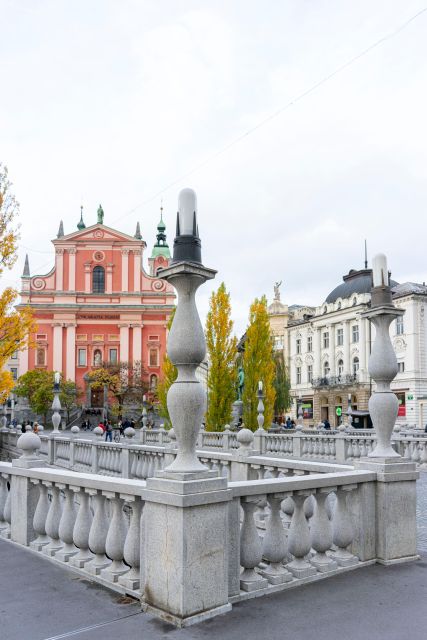
The National Library is one of the tour’s major stops. It is not just a building to photograph from the outside. It helps explain how Plečnik used architecture to express the importance of learning, culture, and national identity.
The tour description does not promise interior access, so you should expect the guide to interpret the building and its design rather than assume a full indoor visit. That distinction matters if you are choosing this experience mainly to see interiors.
The building is especially useful as a lesson in Plečnik’s style. Rather than treating architecture as a blank shell, he gave civic buildings a strong presence and a clear role in the city. Your guide can connect the National Library to Plečnik’s wider plan for Ljubljana, helping you understand why one architect’s work appears in so many different settings.
For me, this is where the UNESCO theme becomes practical. You begin to see that heritage is not only about preserving old walls. It can also involve protecting an architect’s vision for streets, bridges, public buildings, and daily city life.
Križanke Complex and the city’s changing use
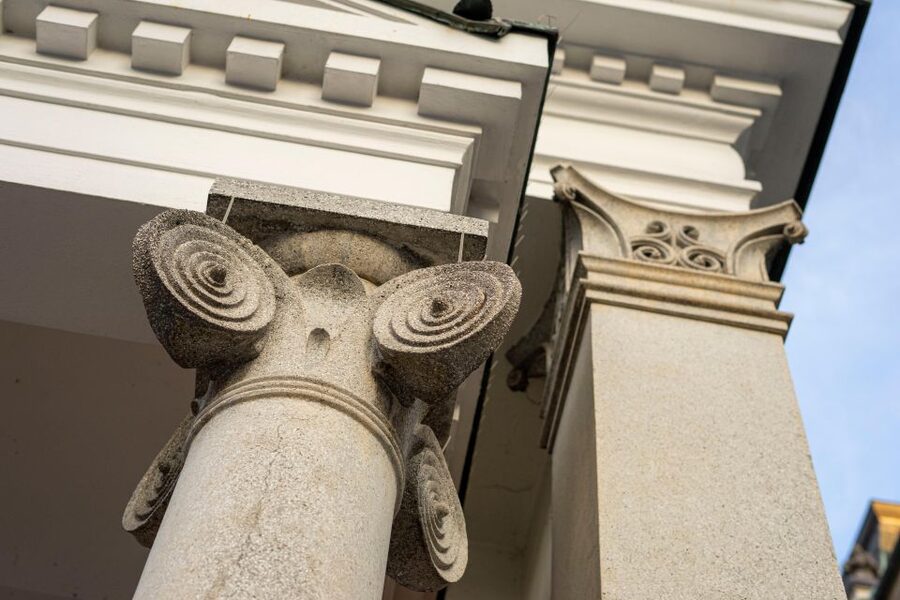
The Križanke Complex is another important stop. It adds a different note to the tour because it shows how historic architecture can serve a modern public purpose.
The supplied details identify Križanke as one of the iconic buildings you will visit and explore, but they do not specify the exact interior access or event schedule. Ask your guide what is open on the day of your tour. That will help you set realistic expectations and avoid assuming that every part of the complex is available for entry.
Križanke also helps balance the National Library. One is closely linked with scholarship and public culture. The other lets you think about performance, gathering, and the way older spaces continue to serve the city. A good guide will use these contrasts to explain Plečnik’s place in Ljubljana rather than simply reciting dates and design terms.
A completely different kind of day out:
- Ljubljana: Postojna Cave & Predjama Castle Tickets and Tour
★ 4.9 · 2,146 reviews - From Ljubljana: Trip to Lake Bled and Bled Castle
★ 4.7 · 1,426 reviews - Slovenia in One Day: Lake Bled, Postojna Cave and Predjama Castle
★ 5.0 · 879 reviews - Ljubljana: Castle Entry Ticket with Optional Funicular Ride
★ 4.3 · 718 reviews
Counting Plečnik’s lamps across three bridges
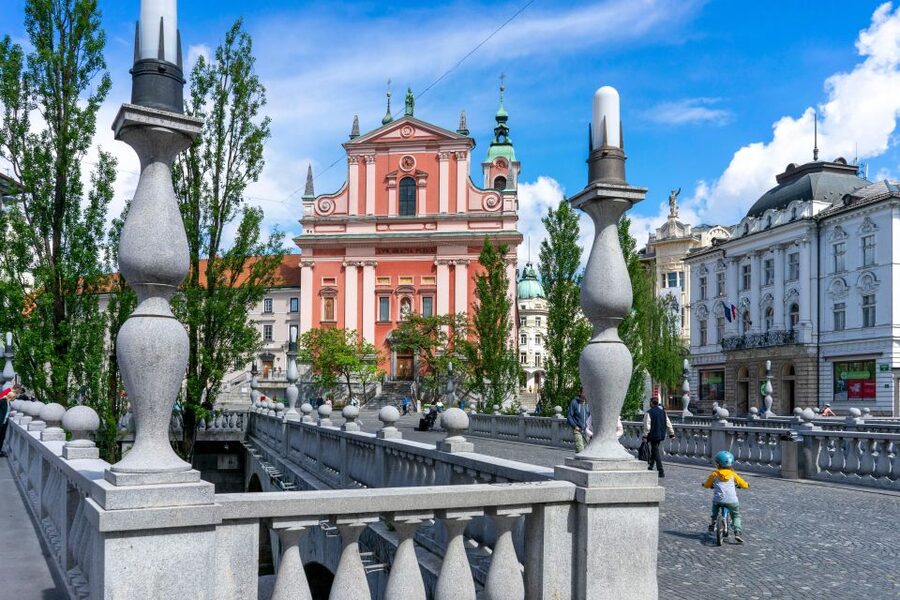
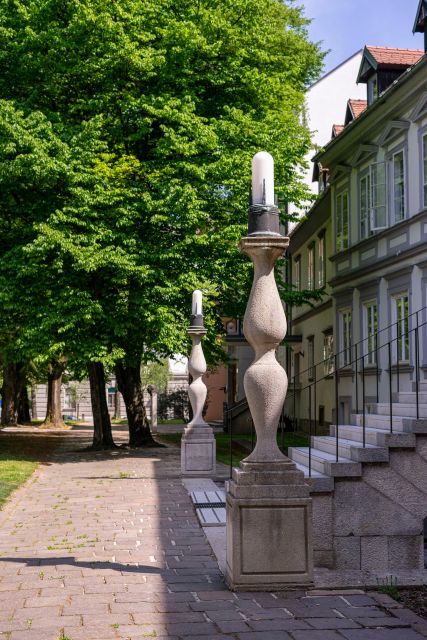
The bridge section gives the walk a playful task: count Plečnik’s lamps on the Triple Bridge, Cobblers Bridge, and Trnovo Bridge. This is a small detail, but it is a clever way to make you pay attention.
Ljubljana’s bridges are easy to cross without really looking at them. The lamp posts, railings, stonework, and proportions can blur into the general prettiness of the old center. Counting the lights turns observation into a game, especially for children or anyone who does not usually enjoy architecture tours.
The Triple Bridge is one of the city’s best-known public spaces, while Cobblers Bridge offers another view of Plečnik’s treatment of the river. Trnovo Bridge gives the route a different setting and helps show that his work extended beyond the immediate center.
The tour details do not list a fixed number of lamps, and that is probably for the best. The point is not to win a mathematics prize. It is to notice how consistently Plečnik used lighting as part of the city’s design.
What Plečnik’s pyramids are doing there
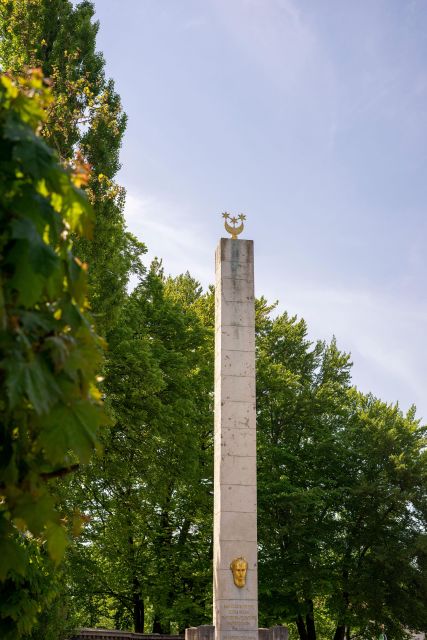
The pyramids are another recurring detail. The guide asks you to count them and explains what they mean, turning an ordinary-looking feature into a clue about Plečnik’s thinking.
The information provided does not give a single official explanation for the pyramids, so you should let the guide explain their role on site rather than rely on a guessed interpretation. This is one of the places where a local guide adds real value. A photograph may show the shape, but it cannot explain why it appears where it does or how it relates to the surrounding architecture.
I like this approach because it trains you to read the city. After the tour, you may find yourself looking for repeated shapes, unusual lamps, and deliberate alignments instead of simply moving toward the next major sight.
Central Market, public life, and the best sensory stop
Central Market brings the tour down from grand civic ideas to everyday Ljubljana. You follow the fragrances of the market, see the Plečnik-designed market building, and experience a place still linked to ordinary shopping and local routines.
This is likely to be one of the most enjoyable sections if you want more than architecture. Buildings can explain a city’s ideals, but a market shows how people use public space. The sights and smells also give the walk a welcome sensory break from formal discussion.
The market is a practical place to ask your guide for recommendations about food or later stops, although the supplied details do not promise tastings beyond included snacks. Snacks are included, but you should not assume the tour is a full meal or a market food crawl.
The market stop also shows why Plečnik’s work deserves to be viewed as urban planning. He was not designing isolated monuments. He was shaping the places where people cross the river, buy food, meet friends, study, and attend performances.
Prešeren Square and Ljubljana’s story
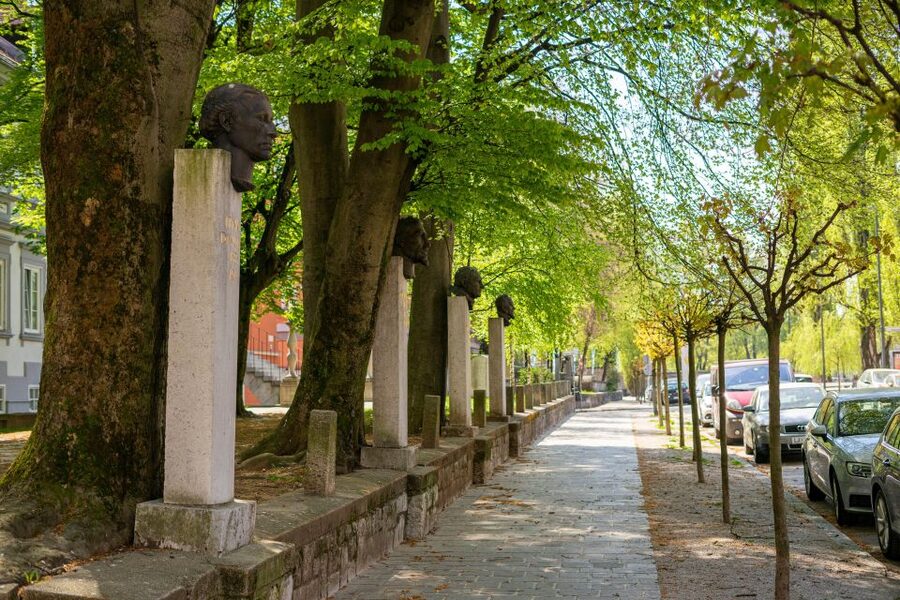
The tour can also include Prešeren Square, dedicated to Slovenia’s national poet France Prešeren. This stop broadens the experience beyond architecture and connects the city’s public spaces with Slovenian culture.
The square is a useful place to understand Ljubljana as a capital. It brings together the riverfront, bridges, movement through the old center, and the city’s literary identity. Urbano was praised for explaining how Ljubljana developed from a medieval settlement into the appealing capital you see today.
That historical thread is important. Without it, Plečnik’s work might seem like a series of clever design tricks. With it, the bridges and public buildings become part of a larger effort to give Slovenia a strong national center.
How long the walk takes and what the pace feels like
The duration is listed as two to four hours. That is a wide range, but it reflects the private format and the number of sites that may be covered. A shorter version could suit you if you want a clear introduction before exploring independently. A longer version should allow more explanation, questions, and time around the bridges, market, library, and Križanke Complex.
The walk is described as easy and not physically demanding. You should still wear comfortable shoes because the experience takes place on city streets and bridges. Bring a camera, but do not let it keep you from looking closely at the lamps and stone details.
Wheelchair access is available, though the exact route and access conditions at individual buildings are not specified. If this is important for your group, discuss the route with the guide before the start.
The guide can lead in Croatian, English, Serbian, Slovenian, or Spanish. That range is useful for private groups with different language needs, but you should confirm your preferred language when booking.
Is $223 good value for a private group?
At $223 per group of up to seven, the price is easiest to judge by group size. One or two people will pay a premium for privacy. A group of six or seven brings the cost per person down sharply, making the tour much more competitive with other guided city walks.
You are paying for more than a route between famous buildings. The value comes from having a certified local guide explain why the same architect appears in so many parts of Ljubljana. The private format also gives you space to ask about the city, Slovenia, food, later sightseeing, or practical plans.
The tour includes snacks, all fees and taxes, and advice on further activities. There is no separate charge listed for those items. Since no transportation is included as a main feature, you should think of this as a walking experience rather than a sightseeing vehicle tour.
I would choose it early in a Ljubljana stay. The city orientation can help you understand where the main areas are, and the guide’s suggestions may help shape the rest of your visit.
Who should book this Ljubljana UNESCO tour?
I would recommend it to first-time visitors who want a strong introduction to Ljubljana’s architecture and city layout. It also suits anyone who likes public spaces, bridges, design details, and the stories behind ordinary-looking objects.
Families may enjoy the lamp-counting and pyramid-counting tasks. The easy pace and private group format make it simpler to pause when needed, though you should confirm the exact route for your group.
Architecture fans will get the most from the tour, especially if they want to understand Plečnik’s work as a connected plan. If you mainly want interior visits, check access before booking because the supplied information emphasizes exploration and explanation rather than guaranteed entry into every building.
You may want to skip it if you have only a short amount of time and prefer to see Ljubljana independently. The center is compact, and you can view many exteriors without a guide. You will miss the deeper explanation of the lamps, pyramids, and Plečnik’s vision, which is the main reason to pay for this experience.
Should you book it?
Book this tour if you want Ljubljana to make sense, not just look pretty. It is particularly good value for a private group of several people and for visitors who appreciate a guide who can turn street lamps, bridges, and market buildings into part of a larger story.
Before booking, confirm the expected length, starting time, preferred language, and whether the National Library or Križanke Complex will be visited inside. If those details suit your plans, this is a thoughtful and easy way to get your bearings while seeing the UNESCO-recognized work of Ljubljana’s defining architect.
FAQ
Where does the tour meet?
The meeting point is by the fountain in the middle of Krekov trg Square, near the Ljubljana Castle funicular.
Can the guide meet my group somewhere else?
Yes. The guide can meet your group elsewhere in Ljubljana city center if arranged in advance.
How long does the tour last?
The tour lasts between two and four hours. Starting times depend on availability.
How much does the private tour cost?
The price is $223 for a private group of up to seven people.
Which languages are available?
The guide can lead the tour in Croatian, English, Serbian, Slovenian, or Spanish.
Is the walking route physically demanding?
No. The tour is described as an easy walk and is not physically demanding.
Is the tour wheelchair accessible?
Yes, the activity is listed as wheelchair accessible. You should confirm the exact route and building access when arranging the tour.
What sights are included?
The tour includes key Plečnik sites such as the National Library, Križanke Complex, Triple Bridge, Cobblers Bridge, Trnovo Bridge, and Central Market. Prešeren Square may also be part of the city orientation.
Are snacks included?
Yes. Snacks, all fees and taxes, a professional certified local guide, and advice about further activities in Ljubljana or Slovenia are included.
Just added in Ljubljana
- Photo Tour: Ljubljana City of Lights★ 5.0 · 1 review
- Ljubljana: Wonderful tour fun experience time history★ 4.9 · 7 reviews
- Ljubljana: Škocjan Caves, Rakov Škocjan & Predjama castle★ 4.2 · 9 reviews
- Ljubljana: Open Wheel Pottery Workshop★ 5.0 · 1 review
- Ljubljana: Private Goldsmithery & Jewelry Workshop and Tour★ 5.0 · 1 review
- Ljubljana: Private 2h Sightseeing Walking Tour★ 5.0 · 2 reviews
- Ljubljana: Private Pottery Workshop★ 5.0 · 1 review
- Ljubljana: Interactive Workshop with Experienced Weaver★ 5.0 · 3 reviews
Historical Tours, compared.
Historic Ljubljana Tour with Ljubljana Castle included
Read our review →
Browse the lists this tour appears in